Deep vein thrombosis and pulmonary embolism
The symptoms of venous thrombosis are caused by the partial blockage of blood flow upstream of the clot. They depend on where the clot is located. Superficial phlebitis (close to the skin) tends to occur in people who have varicose veins.
What are the symptoms of phlebitis?
Phlebitis close to the skin causes redness over the affected vein, which is warm, painful and sometimes swollen. On palpation, a hard cord can be felt where the vein is blocked. Phlebitis of a large vein causes severe pain in the calf or thigh, and sometimes the arm. Cramps, numbness or a feeling of warmth in the affected limb may be felt. But in half of all cases, deep vein thrombosis causes few symptoms or even goes unnoticed. When the clot severely blocks blood flow, the limb is swollen and the skin is tight, shiny and whitish or bluish in colour. When deep vein thrombosis affects the calf, the person sometimes feels sharp pain when lifting the tip of the foot towards the knee (known as "Homans' sign"). A mild fever (38 °C) may also be present. The onset of these symptoms warrants urgent medical attention. The painful area must never be massaged, as this could dislodge the clot from the vein wall.
What are the complications of phlebitis?
The complications of deep vein thrombosis can be serious, which explains the attention paid to preventing it when risk factors are present. The main complication of deep vein thrombosis is embolism, which is potentially fatal if left untreated.
Pulmonary embolism
Pulmonary embolism is the most serious complication of deep vein thrombosis. In this case, all or part of the blood clot breaks away from the vein wall and is carried away in the bloodstream. It travels up to the heart and then into the pulmonary artery (which carries deoxygenated blood to the lungs), which it blocks: this is pulmonary embolism. The symptoms of pulmonary embolism are breathlessness, chest pain and sometimes loss of consciousness. If a pulmonary embolism is suspected, emergency hospital admission is necessary.
Post-thrombotic syndrome
The test is carried out by an interventional cardiologist in a sterile environment, under local anaesthetic, with the patient lying on their back. It takes 20 to 30 minutes. For coronary angiography, an iodinated contrast agent that is opaque to X-rays has to be injected into the two coronary arteries of the heart so that they can be clearly seen on the images. This contrast agent is introduced through a catheter inserted after local anaesthesia, either into an artery in the groin (femoral artery) or into an artery in the wrist (radial approach). Once the catheter is in place, very fine tubes are passed through it to deliver the contrast agent into the heart's arteries. At the same time, if the cardiologist finds a narrowing of the coronary arteries, he can perform a coronary angioplasty, i.e. insert a balloon that is inflated to widen the artery and then removed. A stent (a small metal spring) may be placed to ensure that the widening achieved is maintained. Once the test is finished, the tubes and catheter are removed, a pressure dressing is applied and the patient is taken back to their room. There are few side effects associated with coronary angiography. The patient may experience hot flushes due to the contrast agent, palpitations, or some tiredness after the test.
What causes phlebitis?
Venous thrombosis occurs when three conditions are met: a local slowing of blood flow ("stasis"); damage to the inner wall of the vein; and an increased tendency of the blood to clot. These conditions arise in particular in cases of: prolonged bed rest (walking promotes blood circulation in the veins and prevents stasis), chronic inflammatory disease or recent surgery (these factors damage the walls of the blood vessels), blood clotting disorders or cancer (two health problems that increase the tendency of the blood to clot and form a thrombus).
Can venous thrombosis be prevented?
Because the risk factors for venous thrombosis are known, and because its complications can be serious, preventive measures are routinely put in place in certain situations, particularly during bed rest. For example, after surgery, the patient is encouraged to get up and walk as soon as possible to promote blood circulation. In addition, preventive treatment is often prescribed.
Preventing thrombosis during illness
When a person has a high risk of deep vein thrombosis, their doctor prescribes treatment to prevent blood clots from forming (anticoagulant treatment, also known as "antithrombotic" treatment). Preventive treatment uses the same medicines as those prescribed to treat established venous thrombosis. The duration of preventive treatment for deep vein thrombosis varies according to the nature of the risk factors. For example, after surgery, treatment lasting one or two weeks is generally sufficient and may include wearing compression stockings or taking an anticoagulant. In a person immobilised in a plaster cast, preventive treatment is continued until the cast is removed. People receiving preventive treatment for deep vein thrombosis must take certain precautions: avoid taking high-dose aspirin or NSAIDs (ibuprofen, for example) unless expressly authorised by the doctor; and possibly have regular blood tests to check the platelet count. In people at risk of bleeding (for example, those with a peptic ulcer, chronic alcoholism or anaemia), preventive treatment for deep vein thrombosis is limited to compression stockings.
Preventing thrombosis when travelling
When travelling by plane, train or car for more than 6 hours at a stretch, people at risk of venous thrombosis should take certain precautions: wear class II compression stockings; do foot flexion/extension exercises and move around during the journey; drink enough water throughout the journey; wear loose-fitting clothing. In addition, people at risk (history of phlebitis, recent injury or surgery, cancer) may be given an injection of an antithrombotic medicine in the days before travelling.
How is phlebitis diagnosed?
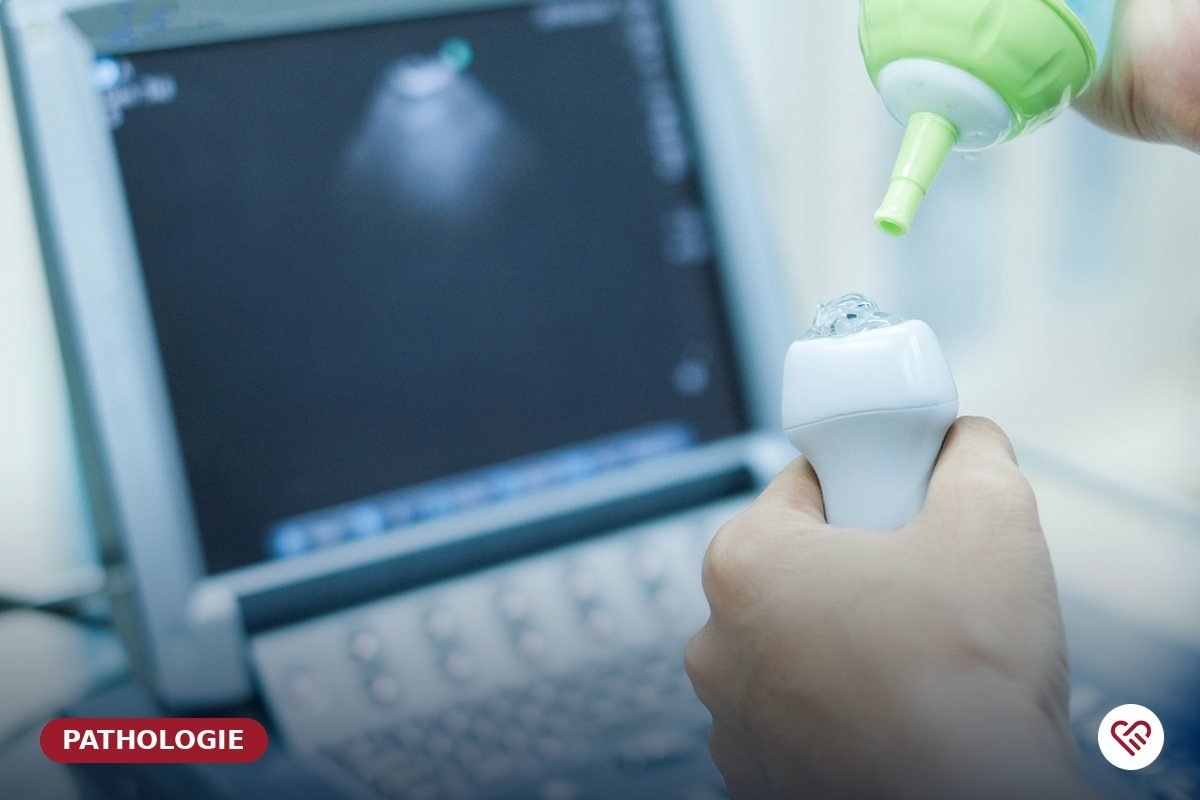
The diagnosis of venous thrombosis is based on clinical examination and symptoms. To confirm the diagnosis, the doctor will request a Doppler ultrasound scan (which shows the blockage of blood flow by passing an ultrasound probe over the affected limb) or, rarely, a venography (an X-ray examination of the veins). In some cases, the doctor may also order a blood test for D-dimers, substances produced when a clot forms. A low blood level of D-dimers generally rules out phlebitis. On the other hand, a high D-dimer level is not meaningful on its own, as levels can be raised in many situations other than phlebitis. What is a venous Doppler ultrasound? A Doppler ultrasound is a test used to examine the veins and arteries and to visualise any clot in a blood vessel. It uses ultrasound waves and takes between 15 and 30 minutes. It does not require local or general anaesthesia, or any injection.
How is venous thrombosis treated?
The treatment of phlebitis aims to relieve the symptoms and prevent further clots from forming. It may be necessary to remove the clot or to inject medicines to dissolve it. The doctor may also prescribe anticoagulant medicines, by injection or by mouth, as well as compression stockings. Sometimes, in case of recurrence in a superficial vein, the doctor may have the affected vein removed. Immobilisation should be as short as possible and activities should be resumed gradually. Compression stockings must be worn for at least two years in the case of deep vein thrombosis. It is important to follow the medical and non-medical treatments prescribed by the doctor carefully, for the full recommended duration.
When is anticoagulant treatment prescribed for superficial venous thrombosis?
Treatment of superficial venous thrombosis consists of rest, raising the affected limb and applying lukewarm water compresses to the inflamed area two to three times a day. A painkiller may be prescribed. In some cases, if the person is at risk of deep vein thrombosis, the doctor may decide to prescribe subcutaneous anticoagulant injections.
How is anticoagulant treatment given for deep vein thrombosis?
Deep vein thrombosis is treated with anticoagulants, which can be given in 2 ways: either by injection, with daily injections of heparin derivatives (most often low-molecular-weight heparin, or fondaparinux). These injections are usually given by a nurse at home, but in some cases can be self-administered by the patient. They are intended to stop the clot extending within the vein and to prevent it from travelling to the lungs. Injectable anticoagulants are quickly combined with oral anticoagulant treatment (vitamin K antagonists, VKAs), except in cases of cancer. The two treatments are given at the same time until the oral anticoagulants, which take longer to act, are sufficiently effective (blood tests are carried out to check this). The injectable anticoagulant is then stopped and VKA treatment is continued for a period ranging from six weeks to more than a year, or even for life, depending on the patient; or directly by mouth with direct oral anticoagulants.
What are compression stockings?
Elastic compression is an essential part of the prevention and treatment of venous thrombosis. It involves wearing socks, knee-high stockings, stockings or tights that apply pressure to the leg, which, combined with movement, promotes blood circulation in the veins and its return to the heart. Compression stockings (sometimes called varicose vein stockings) are divided into three classes according to the pressure they exert on the leg, expressed in millimetres of mercury (mmHg): "class I" stockings exert a pressure of 10 to 15 mmHg. They are mainly intended for people who stand for long periods, pregnant women, people making long journeys and those with venous insufficiency; "class II" stockings exert a pressure of 15 to 20 mmHg. They are prescribed for people who have just had vein surgery, pregnant women and travellers at particular risk of venous thrombosis, as well as people with varicose veins or swelling (oedema) of the legs; "class III" stockings exert a pressure of 20 to 36 mmHg. They are intended for people who have already had venous thrombosis and those with severe varicose veins, severe leg swelling or post-thrombotic syndrome. Stronger compression stockings (30 to 40 mmHg) are also available and appear to be particularly useful in preventing post-thrombotic syndrome. Compression stockings are contraindicated in people with diabetes who have severe disorders of the small blood vessels (microangiopathy), in people with arterial disease of the legs (peripheral arterial disease), and in those with loss of sensation in the feet and legs (neuropathy) or untreated heart failure. Compression stockings come in different sizes. The pharmacist should measure the ankle in the morning to determine the right stocking size. The choice between socks, stockings or tights depends on the location of the thrombosis. The cost of compression socks, stockings and tights is partly covered by health insurance when they are prescribed by a doctor.
How to use compression stockings correctly
Putting on compression stockings requires some care. They should be put on as soon as you wake up, before getting out of bed. If you need to get up quickly (for example to go to the toilet), you should lie back down for a few minutes before putting on your compression stockings. Remove your rings or wear gloves before putting on the stockings, as a single snag is enough for a stocking to lose its elastic properties. The stockings should first be placed over the tip of the foot, then up to the heel, then rolled up over the ankle and leg, without ever pulling on them and making sure there are no creases. A demonstration by the doctor, nurse or pharmacist can be helpful, especially as class II and III compression stockings are sometimes difficult to put on. Devices are available to help put them on. To keep them effective, the stockings should be washed by hand without wringing and dried flat, away from radiators. They should be replaced every three months to remain fully effective.
Drug treatment
The medicines prescribed to treat venous thrombosis are intended to prevent blood clots from forming or extending. There are injectable anticoagulants and oral anticoagulants.
UNFRACTIONATED HEPARIN (UFH): Unfractionated heparin is the oldest of the injectable anticoagulants. Its use is limited by the risk of a fall in the blood platelet count, so it must be accompanied by regular blood tests to monitor the platelet count. Unfractionated heparin is injected intravenously or under the skin (CALCIPARINE).
LMWHs: ENOXAPARIN FRAXIPARINE FRAXODI INHIXA INNOHEP LOVENOX Key Biosimilar medicine FONDAPARINUX Fondaparinux has an efficacy similar to that of LMWHs. It is injected under the skin. During treatment with this medicine, there is no need to monitor the blood platelet count.
ORAL ANTICOAGULANTS or VKAs (Sintrom, Coumadin, Previscan) are recommended for treating venous thrombosis and preventing its recurrence, taking over from the initial injectable anticoagulant treatment. Their anticoagulant effect only stabilises after a few days of treatment and persists for 2 to 4 days after stopping treatment, depending on the medicine.
DIRECT ORAL ANTICOAGULANTS ( ELIQUIS PRADAXA XARELTO ) Direct oral anticoagulants (dabigatran, apixaban, rivaroxaban) are also indicated for the treatment of deep vein thrombosis and the prevention of its recurrence. Like VKAs, these anticoagulants are taken by mouth and do not require platelet monitoring. Unlike VKAs, there is no parameter, such as the INR, for monitoring their effectiveness. Their action is very sensitive to a missed dose.
This information is provided for guidance only and does not replace a medical consultation.