Heart rhythm disorders
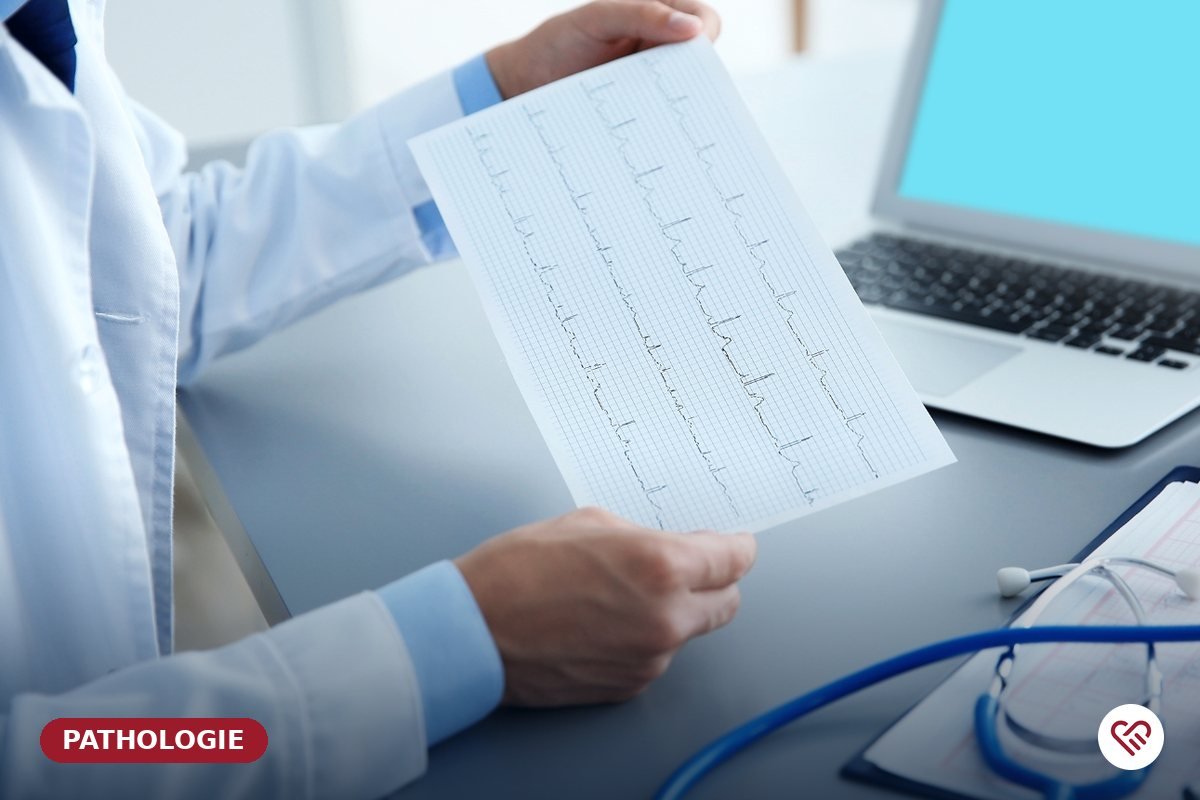
Heart rhythm disorders, or "cardiac arrhythmias", are characterised by irregular heartbeats that are too slow or too fast, without these changes in rhythm being linked to a so-called "physiological" cause (physical exertion, for example). Varying in severity, they are common, particularly in older people. Treatments are available to prevent these arrhythmias from disrupting daily life or leading to serious complications.
What are heart rhythm disorders?
Heart rhythm disorders are defined by irregular heartbeats that are too slow or too fast, without any physiological cause. They may occur occasionally or frequently, and last from a few seconds to several months, or even a lifetime. They are common in older people. There are many different kinds, and most of them are harmless. However, some are disabling or even serious, and can put the patient's life at risk.
How does the heart contract?
The heart is a hollow muscle made up of four chambers: the left and right atria and the left and right ventricles. Its walls contract rhythmically to circulate blood around the body, just like a pump. ELECTRICAL ACTIVITY THAT SPREADS The contractions of the heart muscle are triggered by an electrical impulse that originates in an area at the top of the right atrium called the sinus node (also known as the sinoatrial node, or the node of Keith & Flack). The sinus node spontaneously produces electrical discharges, around 100 per minute. Its electrical activity is controlled by a nerve, the vagus nerve, which tends to slow it down and stabilise it at around 70 discharges per minute (at rest). The electrical activity generated by the sinus node and controlled by the vagus nerve causes the atria to contract, sending the blood they contain into the ventricles. But this electrical activity does not stop in the atria. It travels towards the lower part of the heart to another area located between the atria (the atrioventricular node, or node of Aschoff-Tawara). From this node, the electrical activity spreads through the ventricles along so-called "conduction" fibres (the "bundle of His"), organised into two branches, one for the left ventricle and the other for the right ventricle. When the electrical activity reaches the ventricles, they contract and pump the blood they contain into the aorta (left ventricle) or the pulmonary artery (right ventricle). This is when the pulse is felt. Heart rhythm disorders are classified according to their effect on the heartbeat (speeding up, slowing down, irregularity) and the area of the heart they affect: the atria, the ventricles or the junction between the two.
What is a normal heart rhythm?
At rest, the heart beats at 60 to 100 beats per minute in adults and children, and 90 to 120 beats per minute in infants. Some people have a resting heart rate below 60 beats per minute (endurance athletes, for example) without it affecting their daily life. During physical exertion, the nervous system speeds up the heart rate so that blood flow to the organs is sufficient to supply the oxygen needed for the effort. Even when it speeds up during exertion, a healthy heart continues to beat in a synchronised way: the atria and ventricles contract one after the other, at the same rate. In some heart rhythm disorders, this synchronisation can be lost: the atria beat faster than the ventricles.
What are the symptoms of heart rhythm disorders?
In most cases, heart rhythm disorders do not cause noticeable symptoms. When they are felt, they cause a sensation of pounding in the chest or of the heart racing, or even feeling faint with sudden sweating and pallor, which can lead to a temporary loss of consciousness (syncope). Palpitations are not considered heart rhythm disorders in the strict sense, as these fleeting accelerations of the heart are linked to the effects of stress or anxiety. When heart rhythm disorders are long-standing, they tire the heart and the patient complains of breathlessness on exertion, moderate fatigue, anxiety or sometimes a feeling of "a black veil over the eyes". These symptoms are not very characteristic, and only thorough additional tests can confirm the presence of a heart rhythm disorder.
What are the complications of cardiac arrhythmias?
There are two types of complications of heart rhythm disorders: cardiac complications: when they persist and are not treated, cardiac arrhythmias eventually tire the heart. In the long term, heart failure may develop, meaning the heart is unable to perform its function and adapt to the patient's daily activities. Vascular complications: poor blood flow in the chambers of the heart promotes the formation of clots. Fragments of these clots can break off and enter the bloodstream, causing strokes, retinal problems or pulmonary embolisms (this is known as "thromboembolic risk"). Long-term oral anticoagulants (blood thinners) can prevent these complications.
What causes heart rhythm disorders?
Cardiac arrhythmias can have many causes. Often, no specific cause can be identified, in which case they are referred to as "idiopathic" heart rhythm disorders. In other cases, the causes of cardiac arrhythmias may include: age; disease of the coronary arteries (which supply oxygen to the heart muscle), for example cholesterol deposits (atherosclerosis) that narrow them; the after-effects of a myocardial infarction; malfunctioning heart valves, for example after acute rheumatic fever; stress; excessive consumption of stimulants (caffeine, tobacco, drugs, alcohol, etc.); respiratory diseases such as asthma, acute pulmonary oedema or pulmonary embolism; a thyroid disorder (especially hyperthyroidism); taking certain medicines; congenital or genetic disorders. Can cardiac arrhythmias be prevented? Prevention of heart rhythm disorders is based on the general lifestyle measures recommended for heart health: a balanced diet, stopping smoking, moderate alcohol consumption and regular physical exercise. The use of stimulants such as coffee should remain moderate, and recreational drugs are best avoided.
Who suffers from cardiac arrhythmia?
Cardiac arrhythmia can affect people of all ages, to varying degrees. However, pathological forms of heart rhythm disorders mainly affect: older people; people with diabetes, obesity, high blood pressure, thyroid disorders or sleep apnoea; people with hypokalaemia (low blood potassium levels); people who consume excessive amounts of stimulants (caffeine, tobacco, drugs, alcohol, etc.); people with congenital or acquired heart disorders (for example, malfunctioning heart valves); people taking certain medicines that can promote torsades de pointes (notably quinidine, certain antibiotics and certain antipsychotics).
What are tachycardias?
The most common heart rhythm disorders cause an increase in the rate at which the heart (or part of the heart) beats. These bursts of rapid heart rhythm, also known as "tachycardias", can be benign or serious depending on their origin and their potential complications. WHEN THE ATRIA BEAT TOO FAST An acceleration of the atrial contraction rate can be seen in various types of cardiac arrhythmia.
Sinus tachycardia
Sinus tachycardia is similar to the speeding up of the heart caused by exertion. The heart starts beating more than 100 times a minute, in a synchronised way. Usually benign, sinus tachycardia can be triggered by exertion, stress, excessive consumption of stimulants (coffee, tobacco, drugs, alcohol, etc.), fever, certain medicines, anaemia, dehydration or hyperthyroidism, for example. It generally requires no treatment other than treatment of its cause. Sinus tachycardia also occurs during a panic attack: the person starts sweating, turns pale, their heart races and they feel that death is imminent. The attack settles spontaneously within a few minutes. In rare cases, sinus tachycardia is a symptom of a more serious disease, such as heart failure or pulmonary embolism (a blood clot in an artery of the lungs).
Supraventricular tachycardia
Supraventricular tachycardia causes a pulse of between 160 and 200 beats per minute for a few minutes or even a few hours. It is mainly seen in young people with congenital abnormalities of the fibres that conduct impulses within the heart (a kind of short circuit forms between the areas through which the electrical activity spreads). Bouveret's disease (paroxysmal supraventricular tachycardia) and Wolff-Parkinson-White syndrome are the most common forms of supraventricular tachycardia. These conditions are only treated if the episodes of tachycardia are disabling. WHEN THE VENTRICLES BEAT TOO FAST An abnormal acceleration of the ventricular contraction rate can have serious consequences. Most often, a transient ventricular tachycardia causes only a few symptoms: feeling faint, loss of consciousness. But in some serious cases, the acceleration of the ventricular contraction rate can cause sudden death. Ventricular rhythm disorders are often the consequence of pre-existing heart disease or a myocardial infarction.
Long QT syndrome
QT is a segment of the electrocardiogram tracing. In some people, this segment is abnormally long and the ventricles beat abnormally fast. Long QT syndrome is most often due to a genetic or congenital abnormality. Sometimes certain medicines can cause this form of tachycardia or a related form called "torsades de pointes" (see below).
Torsades de pointes
Torsades de pointes cause a brief, irregular acceleration of the ventricular contraction rate (lasting a few seconds, but recurring regularly). Most of the time they cause no symptoms, but they can sometimes cause sudden death. Torsades de pointes may be due to: insufficient blood levels of potassium or magnesium, for example with diarrhoea or excessive use of stimulant laxatives; a heart that beats too slowly; poor oxygenation of the heart muscle; a genetic predisposition; taking certain medicines for cardiac arrhythmia, bacterial infections, depression, bipolar disorder, psychosis, digestive disorders, etc. Treatment is based on treating the cause and, if necessary, administering a heart medicine (isoprenaline).
Ventricular tachycardia
Ventricular tachycardia causes abnormally fast heartbeats: between 120 and 250 per minute. Most often, this arrhythmia is the consequence of pre-existing heart disease or a surgical scar on the heart. When it lasts more than a few minutes, it can lead to ventricular fibrillation.
What are bradycardias?
An abnormally slow heart rate (also called "bradycardia") is usually defined as fewer than 50 beats per minute. But some people have a slow heart rate without being troubled by it. Only bradycardias that are disabling (causing unusual fatigue) or that may lead to complications are considered pathological. Bradycardias are most often caused by an abnormality of the sinus node (for example, scarring due to another heart disease) or a problem with the transmission of electrical activity between the atria and the ventricles ("atrioventricular block"). Hypothyroidism can also cause an abnormal slowing of the heart rate. Persistent bradycardia warrants the implantation of a pacemaker.
This information is provided for guidance only and does not replace a medical consultation.