Coronary angiography and coronary angioplasty
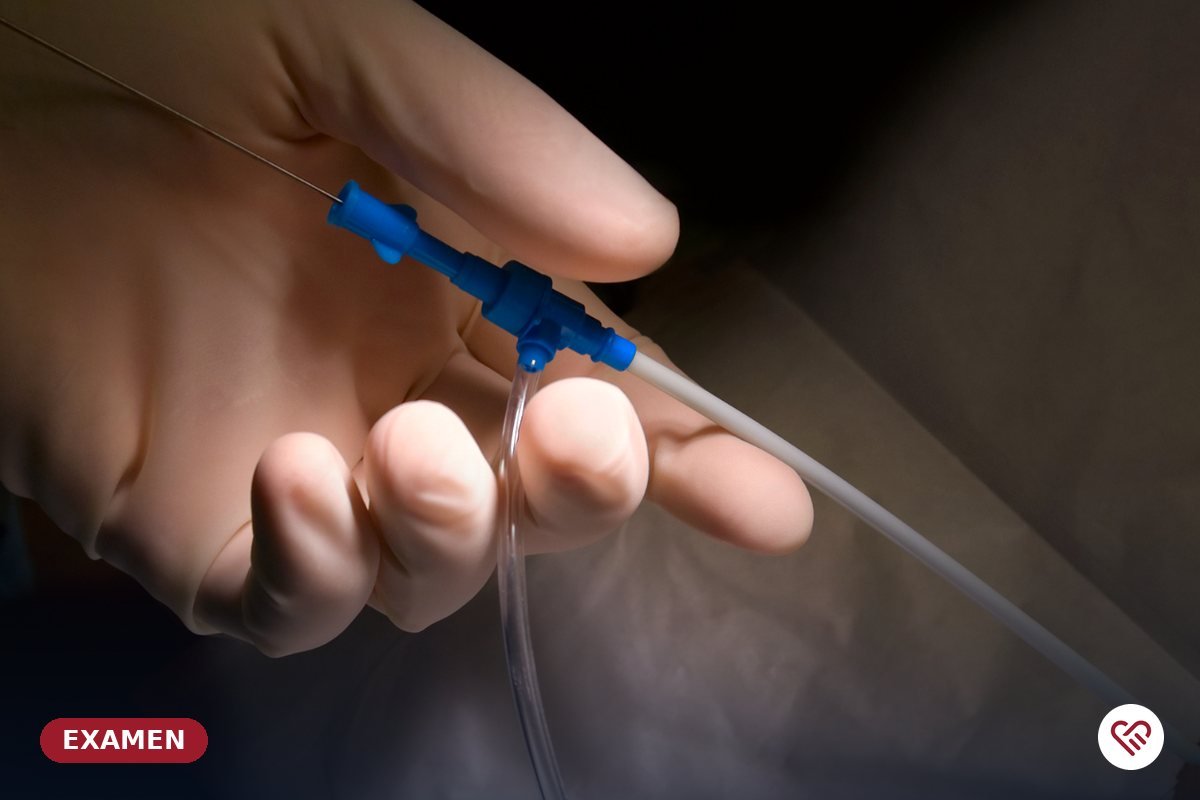
Coronary angiography, Dr Agueznai's speciality, makes it possible to visualise the heart's arteries. If a narrowing is found, it can be treated during the same procedure with angioplasty and stent placement, without surgery.
What is a coronary angiography?
Coronary angiography is an invasive medical imaging test designed to visualise the coronary arteries and their branches, which supply blood to the heart. An iodine-based contrast agent is injected through a catheter (a long, narrow tube) into a coronary artery. Because it is opaque to X-rays, it makes the arteries visible on the X-ray images and makes it possible to check that the coronary arteries are working properly and are free of damage, blockage or narrowing. As coronary angiography is an invasive test, it is performed as an emergency in the event of a myocardial infarction or threatened infarction. If, on the other hand, the doctor suspects angina pectoris or coronary artery disease, the coronary angiography is scheduled in advance.
How should I prepare for a coronary angiography?
There are a few measures to follow in order to prepare properly for a test such as coronary angiography. During the preliminary consultation with the cardiologist, you should discuss the treatments and medicines you are taking, especially oral anticoagulants, any allergy to iodinated contrast agents, and whether you have diabetes. Finally, the patient must fast for this test, i.e. not eat or drink anything for the four hours beforehand.
What are the contraindications to coronary angiography?
Contraindications to coronary angiography are relatively uncommon. They include allergy to the (iodine-based) contrast agent, or taking anticoagulant treatment that cannot be stopped for a few days in order to undergo the coronary angiography. Finally, the absence of suitable vascular access also makes it impossible to perform a coronary angiography.
How is a coronary angiography performed?
The test is carried out by an interventional cardiologist in a sterile environment, under local anaesthetic, with the patient lying on their back. It takes 20 to 30 minutes. For coronary angiography, an iodinated contrast agent that is opaque to X-rays has to be injected into the two coronary arteries of the heart so that they can be clearly seen on the images. This contrast agent is introduced through a catheter inserted after local anaesthesia, either into an artery in the groin (femoral artery) or into an artery in the wrist (radial approach). Once the catheter is in place, very fine tubes are passed through it to deliver the contrast agent into the heart's arteries. At the same time, if the cardiologist finds a narrowing of the coronary arteries, he can perform a coronary angioplasty, i.e. insert a balloon that is inflated to widen the artery and then removed. A stent (a small metal spring) may be placed to ensure that the widening achieved is maintained. Once the test is finished, the tubes and catheter are removed, a pressure dressing is applied and the patient is taken back to their room. There are few side effects associated with coronary angiography. The patient may experience hot flushes due to the contrast agent, palpitations, or some tiredness after the test.
What happens after the hospital stay or examination of the coronary arteries?
If the coronary angiography was performed via the femoral artery, the patient must lie flat for a few hours to prevent bruising (haematoma) before being able to get up and go home. If the coronary angiography was performed via the radial artery, the patient can get up as soon as the test is over. Coronary angiography may therefore require day-case admission, with someone to accompany you home, or a short hospital stay (24–48 hours).
What are the possible complications and risks of coronary angiography?
Even though medical advances have reduced the risks associated with coronary angiography, it remains an invasive test. Possible complications include an allergic reaction to the contrast agent and a minor bruise (haematoma) at the puncture site. Serious complications are extremely rare, of the order of 0.2 to 0.4 cases per 1,000.
This information is provided for guidance only and does not replace a medical consultation.