Holter ECG and ambulatory blood pressure monitoring (ABPM)
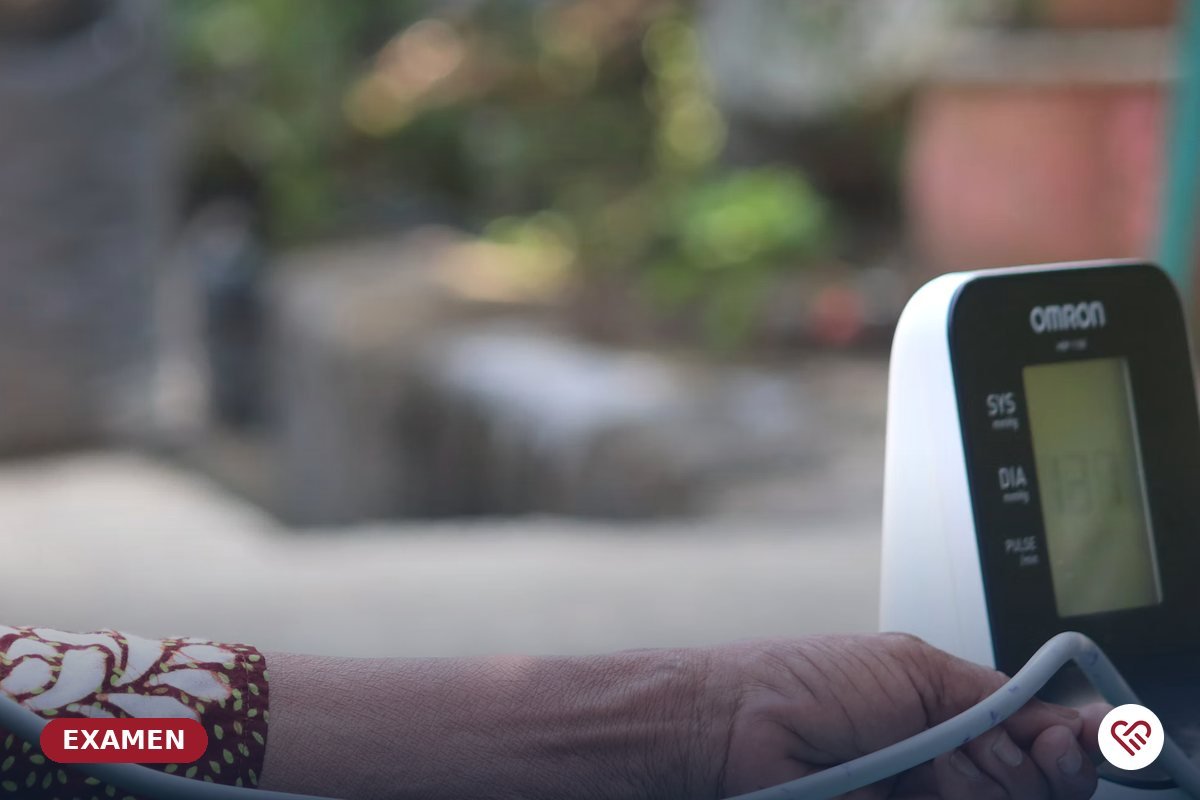
A Holter monitor continuously records, over 24 hours or more, your heart rhythm (Holter ECG) or your blood pressure (ambulatory blood pressure monitoring, ABPM), as you go about your usual activities.
What is a Holter monitor?
A cardiac Holter monitor is a small device, no bigger than a modern mobile phone, that records the electrical activity of the heart over 24 or 48 hours (short-term Holter, worn continuously) or over a longer period (long-term Holter, worn intermittently, with a symptom diary). The Holter performs an ECG (electrocardiogram) while allowing the patient to carry on with their daily activities outside the doctor's surgery. The purpose of the Holter is to study the heart rhythm. Electrodes (plastic-coated patches that stick to the skin) are placed at key points on the chest and abdomen. They are connected by thin wires to the Holter ECG recorder, which measures and records the heart's electrical signal. The heart's electrical impulses coordinate the contractions of its different parts so that blood circulates properly.
What is the difference between a Holter ECG and ambulatory blood pressure monitoring?
Ambulatory blood pressure monitoring (ABPM) uses a portable device to measure and record blood pressure over a full day and night, in order to detect possible high blood pressure. A Holter ECG, which is also a portable device, records the electrical activity of the heart for 24 hours and/or up to 72 hours.
Why have a Holter rhythm monitor fitted?
A Holter monitor records these impulses to assess the heart rate, the rhythm of the heartbeat (to determine whether it is regular or irregular) and the strength of the electrical impulses. The changes recorded by the Holter allow certain heart conditions to be investigated more thoroughly than with a standard electrocardiogram. It can detect heart rhythm disorders, such as extrasystoles (ectopic beats) or palpitations. It can be used to check the effectiveness of antiarrhythmic treatment or of a pacemaker, and to identify cardiac conduction disorders. Finally, it is indicated for patients who experience loss of consciousness and/or chest pain.
How should I prepare for having a Holter monitor fitted?
The Holter monitor is fitted during a cardiology appointment. No local anaesthetic is needed, as the procedure is completely painless, and you do not need to fast beforehand. Unless your doctor advises otherwise, if you are to wear a short-term Holter, take a shower before your appointment: in most cases, short-term Holter monitors must not be removed before the end of the recording and must not get wet. If you have a lot of chest hair, the doctor may need to shave the areas where the electrodes are to be attached so that they stay firmly in place. On the day your Holter is fitted, it is recommended that you: wear clothes with a high neckline (to hide the electrodes) and that are fairly loose (so the recorder can be worn comfortably); avoid wearing an underwired bra: a sports bra is preferable. Certain factors can interfere with the recording. While you are wearing the Holter, you are therefore advised to keep your mobile phone at least 15 cm away from the recorder and to avoid any activity that could make you sweat heavily, as this could cause the electrodes to come loose.
How is a Holter monitor fitted?
Fitting a Holter monitor is quick: it only takes a few minutes. The doctor or nurse carries out the following steps: the healthcare professional attaches the electrodes to your chest. They are about the size of a small coin and are adhesive so that they stay firmly in place for the duration of the test; the practitioner then connects the Holter recorder to the electrodes using thin, flexible wires. You will be told what precautions to take while wearing the Holter. The doctor or specialist positions the Holter so that it bothers you as little as possible: it can be slipped into a pocket or pouch, or clipped to your belt. It can also be worn on a shoulder strap, like a handbag. The doctor will ask you to keep a diary of your symptoms while wearing the Holter, noting in particular any symptoms you notice (for example shortness of breath, a feeling that your heartbeat is jerky or irregular, or chest pain), along with when they occurred and what you were doing at the time. Once the Holter has been fitted, you can leave the medical facility and resume your daily activities. The aim is to record your heart's electrical impulses under normal conditions, so there is no need to lie down or make any particular effort.
What happens after a Holter recording?
If you are wearing a long-term Holter, you may need to come back to have the electrodes changed if they no longer stick properly to the skin. For short-term Holters, you must return the device after 24 or 48 hours, as prescribed by your doctor, so that the recording can be analysed.
This information is provided for guidance only and does not replace a medical consultation.